Precision Lifting for Visible Business Identity
Signs in Lawrence for commercial properties requiring elevated placement and structural integration
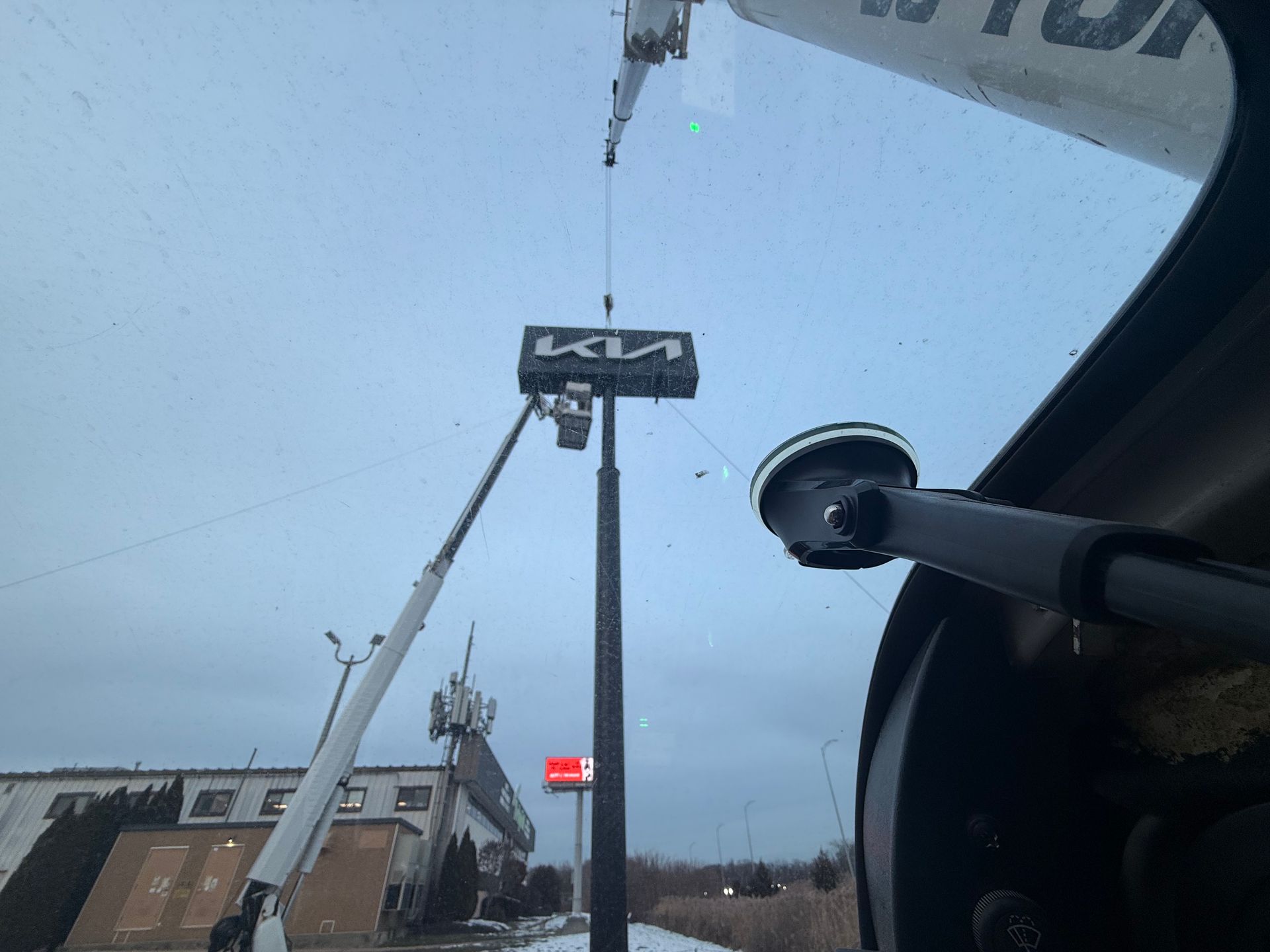
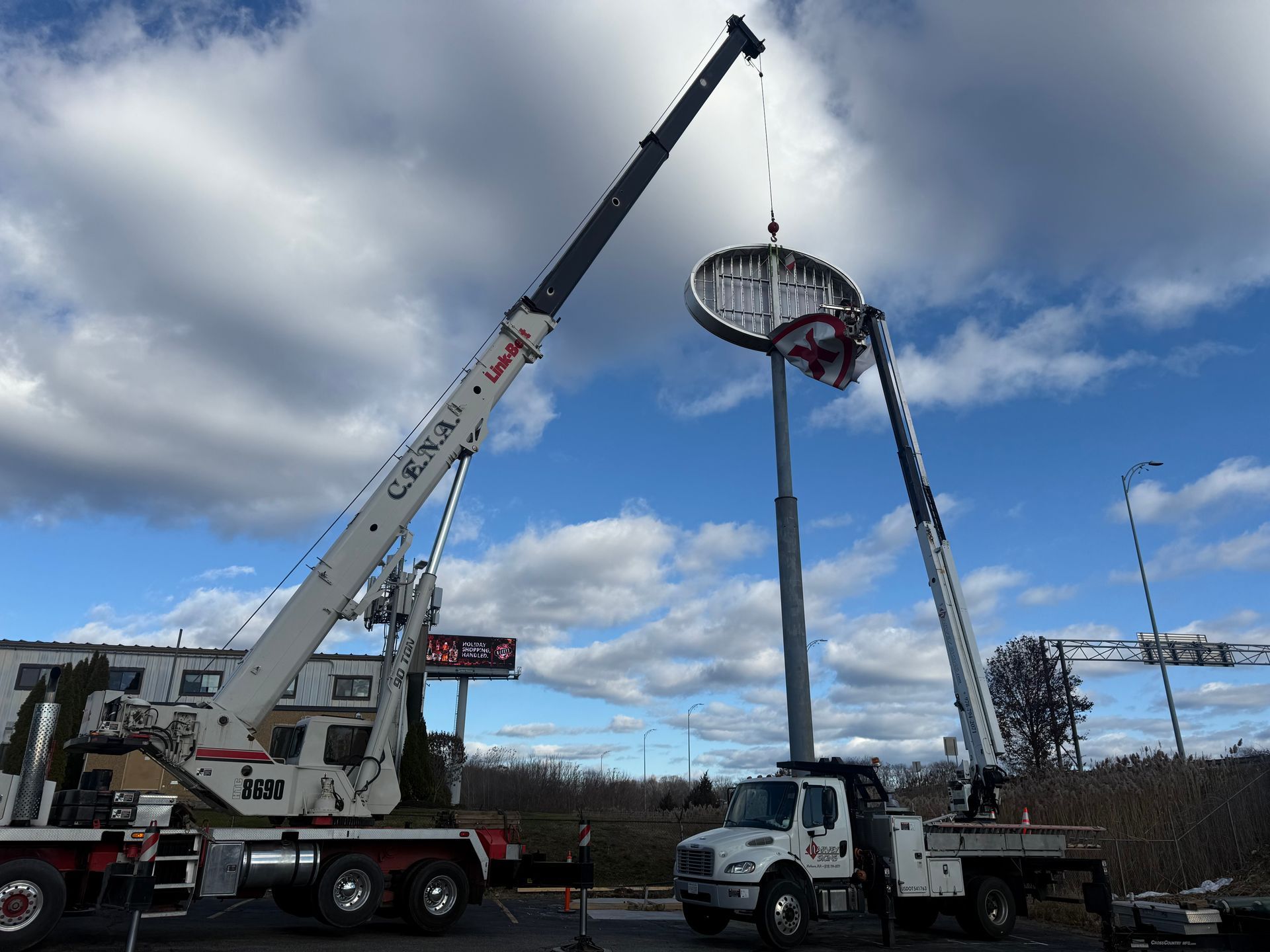
CENA Crane Service handles sign installation in Lawrence and Pelham requiring crane-assisted placement, positioning mounted signage on building facades, rooftops, and elevated structures where ground-based equipment cannot safely reach. When your business identity needs to be visible from highways, major intersections, or above surrounding structures, the installation process involves more than fastening materials—it requires coordinated lifting, precise alignment with mounting hardware, and controlled positioning that accounts for wind load and structural attachment points. Commercial properties in Lawrence often face placement challenges related to building height, street clearances, and the need to install signage without disrupting business operations below.
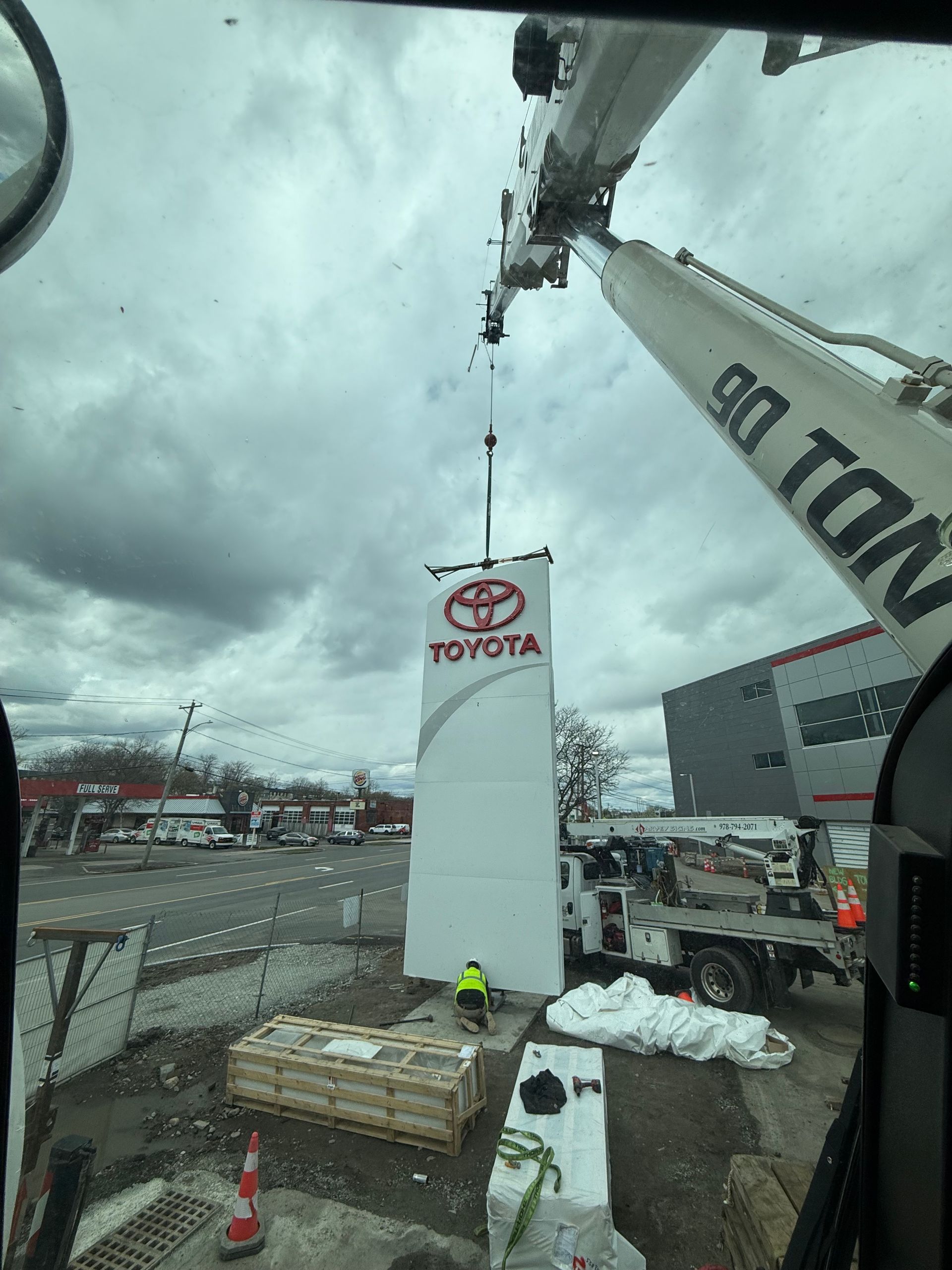
Sign installation using crane services addresses the mechanical challenge of moving large-format signage from ground level to final mounting positions that may be thirty, fifty, or more feet above street level. The process involves rigging the sign assembly with appropriate slings and lifting points, coordinating with installers who guide alignment as the crane operator raises and positions the load, and maintaining stability during the final securing phase when mounting bolts are torqued into structural anchors. Building-mounted signs in this region must account for wind exposure common along the Merrimack Valley corridor, requiring installations that distribute load across multiple attachment points rather than relying on single-point mounting.
Schedule an on-site assessment to review mounting location access and structural requirements for your signage installation.
The crane setup for sign installation begins with establishing stable positioning on the property, accounting for ground conditions, overhead clearances, and the operator's sightlines to both the load and the mounting crew. CENA Crane Service evaluates each site for access constraints, identifying whether the crane needs to operate from street level, parking areas, or adjacent properties, and determining boom length requirements based on building height and horizontal reach needed to position signage accurately over the mounting zone.
Once the sign is secured in place, you notice immediate visibility from approach routes, clean alignment with building lines, and signage that remains fixed despite wind and weather conditions. The installation leaves mounting hardware concealed behind finished sign faces, with no visible rigging points or temporary supports. Properly lifted and positioned signage avoids the stress fractures and misalignment issues that occur when installers attempt to muscle large panels into place using inadequate equipment or improvised lifting methods.
Installation timing often coordinates with electrical contractors who handle wiring for illuminated signs, with the crane service scheduled to position the sign structure before or after electrical rough-in depending on whether conduit runs internally or externally. The service includes load calculation verification to confirm that both the crane capacity and building attachment points can handle the combined weight of sign materials, mounting frames, and any integrated lighting systems.
What Proper Sign Installation Requires
Questions Before Starting Your Project
Business owners in Lawrence and Pelham frequently ask about logistics and preparation before scheduling crane-assisted sign installation.
What site preparation does crane setup require?
The crane needs a level, stable surface capable of supporting outrigger loads, with overhead clearances free from power lines and sufficient space for boom extension—site visits determine whether additional ground protection or utility coordination is necessary before the scheduled installation date.
How is the sign rigged for safe lifting?
Rigging involves attaching slings or spreader bars to designated lifting points on the sign frame, distributing load evenly to prevent bending or twisting during the lift, with rigging configurations adjusted based on sign dimensions and whether the assembly lifts horizontally or vertically during positioning.
What happens if weather conditions change on installation day?
Wind speeds above fifteen miles per hour can affect large-format sign stability during lifting, and installation may be postponed if conditions exceed safe operating limits for crane work—scheduling flexibility accounts for weather windows typical during spring and fall months in this region.
How long does the actual crane work take?
The crane remains on site only as long as needed for lifting and positioning, typically ranging from one to three hours depending on sign size and mounting complexity, with most delays caused by alignment adjustments rather than lifting operations.
What coordination is needed with building owners or landlords?
Installation requires verifying that building structure can support sign weight and wind load, confirming that mounting locations comply with local sign ordinances, and ensuring that crane positioning does not block access or disrupt adjacent businesses during the scheduled installation window.
Peak Renovations, LLC works with property owners throughout the planning and permitting process to address structural and thermal performance questions before construction begins. Request a consultation to discuss your deck's conversion feasibility or review options for new sunroom construction tailored to Asheville's climate demands.